
Why Startups Choose Custom Mobile App Development Over Ready-Made Solutions
- Miss. Lily
- 2 min read
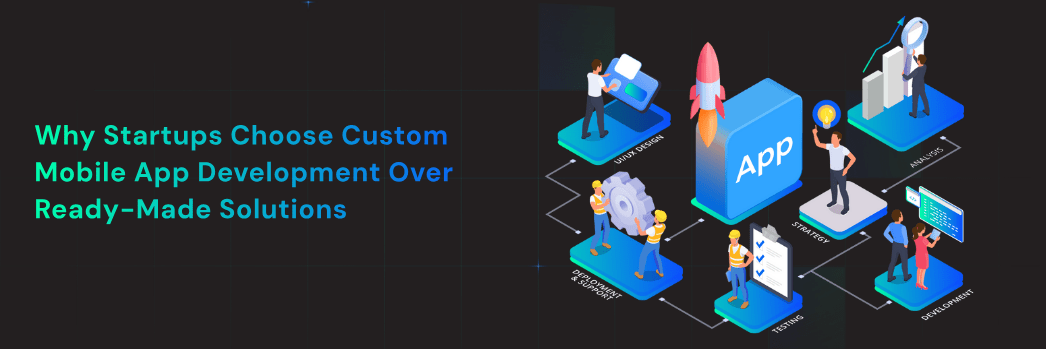
Launching a startup requires countless critical decisions, each impacting long-term success. Among the most significant choices involves how you build your mobile application. Ready-made solutions and app builders promise quick, affordable launches, yet many successful startups invest substantially more by partnering with a mobile app development company for custom solutions. Understanding why reveals strategic considerations that separate thriving startups from those that struggle to scale.
The appeal of ready-made platforms seems obvious—lower upfront costs, faster deployment, and no technical expertise required. However, these short-term benefits often create long-term limitations that constrain growth, compromise user experience, and ultimately cost more than custom app development would have initially. This guide explores why startups increasingly choose custom development despite higher initial investment.
The Limitations of Ready-Made Solutions
Ready-made app builders and template platforms serve specific purposes well—testing simple concepts, creating basic utility apps, or building straightforward informational applications. However, they impose significant constraints that conflict with most startup ambitions.
Feature Restrictions: Template platforms offer predetermined features you can enable or disable, but you cannot create functionality outside their scope. When your unique value proposition requires capabilities the platform doesn’t support, you face impossible choices—abandon differentiating features or rebuild everything custom.
Design Homogenization: Ready-made solutions use standardized templates, creating visual similarity across thousands of apps. Standing out in crowded markets becomes nearly impossible when your app looks generically similar to competitors. Custom branding and distinctive user experiences—crucial for startup recognition—remain largely unattainable.
Performance Limitations: Template-based apps often include unnecessary code supporting features you don’t use, bloating file sizes and slowing performance. Users expecting smooth, responsive experiences abandon sluggish apps quickly, regardless of their functionality.
Scalability Constraints: Ready-made platforms handle modest user bases adequately but struggle as demand grows. When your startup succeeds and user numbers surge, platform limitations force expensive migrations to custom app development anyway—except now you’re rebuilding while managing existing users rather than starting correctly initially.
Why Custom App Development Aligns with Startup Success
Successful startups don’t just need apps—they need competitive advantages. Custom app development creates technological moats that ready-made solutions cannot replicate.
Unique Value Proposition: Your startup likely addresses market needs differently than competitors. Custom development allows building exactly the features that deliver your unique value without compromises. When partnering with experienced Android developers or iOS specialists, you translate competitive differentiation into technical reality.
User Experience Optimization: Custom applications enable designing every interaction specifically for your target audience’s preferences and behaviors. This optimization dramatically impacts conversion rates, engagement, and retention—metrics determining startup survival.
Competitive Differentiation: In markets where multiple startups compete, technical execution often determines winners. Custom apps delivering superior performance, innovative features, or exceptional design create meaningful competitive advantages that template solutions cannot match.
Scalability from Day One: Building with scalability in mind from the start prevents costly rebuilds later. Custom architecture accommodates growth gracefully, handling increased users, expanded features, and additional complexity without fundamental limitations.
The True Cost Comparison
Surface-level cost comparisons favor ready-made solutions—$50-200 monthly subscriptions versus $50,000-200,000+ for custom app development. However, comprehensive analysis reveals different conclusions.
Hidden Ready-Made Costs: Template platforms charge monthly fees perpetually. Over 3-5 years, these subscriptions accumulate substantially. Transaction fees (many platforms take 5-15% of in-app purchases), upgrade costs for premium features, and integration expenses compound quickly. The eventual migration to custom development adds complete rebuild costs on top of years of subscription payments.
Custom Development Investment: While initial costs run higher, custom apps have no ongoing platform fees. You own your code completely. Maintenance costs remain predictable and controllable. When calculated over 5-year periods, custom development often costs less than ready-made solutions while delivering infinitely more capability.
Opportunity Costs: Perhaps most significant are opportunity costs from ready-made limitations. How much revenue do you lose when feature restrictions prevent monetization strategies? How many users churn due to mediocre experiences template constraints create? These invisible costs often dwarf platform subscription savings.
Technical Debt and Future Flexibility
Ready-made solutions create technical debt from day one. Every compromise made to fit platform constraints, every feature you cannot implement, and every user experience optimization you skip accumulates as technical debt requiring eventual repayment.
Custom app development minimizes technical debt by building correctly initially. Your mobile app development company creates clean, maintainable code following best practices. Future feature additions integrate smoothly rather than requiring architectural gymnastics to work around platform limitations.
This flexibility proves invaluable as your startup evolves. Markets shift, customer preferences change, and competitive landscapes transform. Custom apps adapt easily; template apps often cannot adjust without complete platform migrations.
Integration Capabilities and Ecosystem Building
Startups rarely operate in isolation. Your app needs integrating with payment processors, analytics platforms, marketing tools, customer service systems, and potentially partner APIs or enterprise software.
Ready-made platforms support limited integrations—typically only popular services they’ve pre-built connectors for. Custom applications integrate with literally anything possessing an API. This flexibility enables building comprehensive technology ecosystems rather than forcing business processes around platform limitations.
As startups scale, integration capabilities increasingly determine operational efficiency. Custom apps grow with your business; template apps become bottlenecks requiring workarounds.
Data Ownership and Security
Data represents one of your most valuable startup assets. Ready-made platforms store user data on their servers, creating dependency on their security practices, backup systems, and privacy policies. You typically cannot export complete data easily or control exactly how it’s processed.
Custom app development ensures complete data ownership. You control where data resides, how it’s secured, who accesses it, and backup procedures. For startups in regulated industries or those handling sensitive information, this control isn’t optional—it’s mandatory.
Android developers and iOS specialists building custom solutions implement security specifically for your requirements rather than generic platform-wide approaches that may inadequately address your unique needs.
Investor Perception and Valuation
Investors evaluating startups scrutinize technical foundations carefully. Template-based applications raise questions about technical competency, scalability plans, and long-term viability. Investors recognize platform limitations constrain growth potential.
Conversely, quality custom app development demonstrates serious commitment, technical sophistication, and scalable foundations. Custom applications owned completely by the startup (no platform dependencies) contribute positively to company valuations during funding rounds or acquisitions.
Multiple startup founders report investor feedback specifically requesting migrations from template platforms to custom development before funding commitments. Building custom initially avoids these delays and demonstrates strategic thinking investors value.
Speed to Market vs. Speed to Product-Market Fit
Ready-made advocates emphasize rapid launch capabilities. However, startups don’t win by launching first—they win by achieving product-market fit first.
Custom app development with experienced mobile app development companies actually accelerates product-market fit by enabling precise implementation of differentiating features, rapid iteration based on user feedback, and optimization of critical user journeys. Template constraints often prevent the exact implementations required for optimal product-market fit.
The extra 2-3 months of custom development requires upfront payment compared to months or years spent struggling with platform limitations preventing product evolution toward market fit.
Conclusion
Custom development isn’t universally correct for every situation. Ready-made platforms suit specific scenarios appropriately.
Simple utility apps without competitive pressure, internal tools for small teams, quick concept validation before committing to full development, and apps where the template platform’s exact feature set matches your complete requirements can legitimately use ready-made solutions.
However, most startups seeking significant growth, market disruption, or competitive positioning benefit enormously from custom app development despite higher initial investment.

Frequently Asked Questions
How much does custom mobile app development cost for startups?
Custom app development typically ranges from $50,000 to $200,000+ depending on complexity, platform requirements (iOS, Android, or both), and feature scope. Simple apps start around $30,000-50,000, while complex applications with advanced features can exceed $300,000. Partnering with a mobile app development company that understands startup constraints helps optimize budgets effectively.
Can we start with a template and migrate to custom later?
Technically yes, but migrations essentially require complete rebuilds since template code rarely transfers. Most startups spending $50,000-100,000 migrating later wish they’d invested in custom app development initially. If you anticipate eventually needing custom, starting there saves money and time long-term.
How long does custom mobile app development take?
Typical timelines range from 3 to 6 months for initial versions, depending on complexity. Simple MVPs with core features can launch in 2-3 months. Complex applications with extensive features require 6-9+ months. Experienced Android developers and iOS teams working in parallel can reduce timelines while maintaining quality.
Do we need separate Android and iOS development?
Not necessarily. Cross-platform frameworks like React Native or Flutter enable code sharing between platforms, reducing costs 30-40% compared to native development while maintaining near-native performance. For maximum performance and platform-specific optimization, separate native development by specialized Android developers and iOS teams delivers the best results but costs more.
How do we choose the right mobile app development company?
Evaluate portfolios emphasizing similar app types, check client references specifically about communication and deadline adherence, assess technical expertise in your required platforms and technologies, understand their development methodology and how they handle changes, and ensure cultural fit and shared vision for your startup’s success. Startups benefit from companies experienced with early-stage constraints.
What ongoing costs follow custom app development?
Plan for maintenance and bug fixes (typically 15-20% of initial development cost annually), hosting and infrastructure costs ($100-1,000+ monthly depending on scale), App Store fees (Apple: $99/year, Google: $25 one-time), and periodic feature additions and updates. These costs remain predictable and controllable, unlike platform percentage fees on revenue.
Search
Recent Post
- How Much Will It Cost to Build A Mobile App in 2026?
- Custom Mobile App Development Company vs. Freelancers: Which One Should You Hire?
- iOS & Android App Development Best Practices for Modern Businesses
- Future of Mobile Apps: Role of a Mobile App Development Company
- How Page Speed Affects Ecommerce Sales in USA
- Angular vs React: Which Framework Performs Better?
Categories
- Blog (57)
- It Solution (2)
- Mobile App (15)
- option1 (1)
- option2 (1)
- UX Design (1)
- WordPress (2)
Tags
Android App Development Services
Angular vs React
app development
AppDevelopment
App Store Optimization
best app development companies
best website developer in india
Custom App Development
Custom App Development Company
Custom mobile app development
Custom web applications
Digital Auxilio
Digital Marketing Company
Digital marketing services
Ecommerce Development
ECommerce website development
flutter app development
Hire Android App Developers
ios app development
iOS app development company
iOS app development services
mobile app
Mobile App Development
MobileAppDevelopment
mobile app development company
mobile app development company in India
mobile app development services
Mobile Applications
seo
seo company
SEO executives
SEO experts
seo services
Shopify Development
Social Media Marketing
software development lifecycle
software development management
UI/UX Design
UI/UX Designing Services
web apps designed
Web Designing Services
Web development
Website Designs
Website Development
WordPress eCommerce Development
You may also like
How Much Will It Cost to Build A Mobile App in 2026? Working with the Right Team You have a...

Custom Mobile App Development Company vs. Freelancers: Which One Should You Hire? Working with the Right Team So you want...
iOS & Android App Development Best Practices for Modern Businesses Building a mobile app for your business? You’re making a...
