
How Much Will It Cost to Build A Mobile App in 2026?
- Miss. Lily
- 2 min read
Working with the Right Team
You have a brilliant app idea. Now comes the inevitable question: how much is it actually going to cost? It’s one of the most important — and most misunderstood — questions in the world of digital product development. Get it wrong, and you either underfund a project and watch it stall, or you overbuild a feature set no one needs.
At Digital Auxilio Technology, we’ve helped startups, SMEs, and enterprises turn app ideas into thriving digital products. In this guide, we break down every cost factor that matters in 2026, give you real numbers, and show you how to make smart investment decisions — not just cheap ones.
The 2026 Cost Snapshot
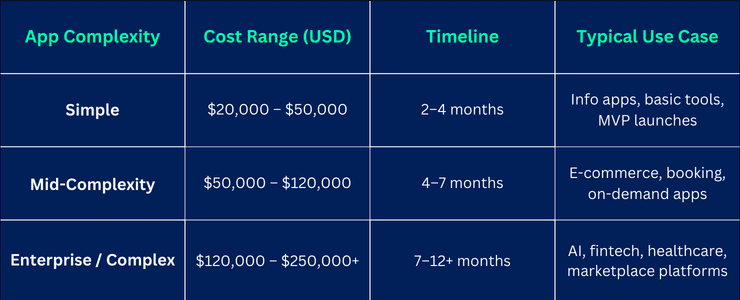
App development costs in 2026 span a wide spectrum. The global average depends heavily on where your team is based, how complex your features are, and which platforms you target. Here’s a quick-reference breakdown used across the industry:
What Drives the Cost? The 7 Key Factors?
Platform Choice
Your platform decision is one of the first — and most impactful — cost choices you’ll make. Building for iOS only or Android only keeps budgets leaner, while targeting both platforms naturally doubles the effort. Cross-platform frameworks like Flutter or React Native offer a smart middle ground, delivering apps for both platforms from a single codebase and cutting development costs by 30–40% compared to building two fully native apps.
Feature Complexity
Not all features are created equal when it comes to cost. Basic functionality like user login, push notifications, and a profile page is relatively affordable to build. However, the moment you introduce real-time GPS tracking, AI-driven recommendations, payment gateways, or AR/VR experiences, development hours multiply significantly — and so does your budget.
UI/UX Design
Design is where your app makes its first impression — and it directly affects whether users stay or leave. Custom animations, cohesive brand design systems, and thorough user testing all require additional investment, typically accounting for 10–15% of your total development budget. It’s a cost worth taking seriously, as strong design consistently drives better retention and higher conversion rates.
Development Team Location
Where your team is based has a major influence on your final bill. Developers in the US and UK typically charge between $100–$200 per hour, while India-based teams offer highly competitive rates of $20–$50 per hour. Eastern European agencies fall somewhere in between at $50–$100 per hour. That said, geography alone doesn’t determine quality — always evaluate an agency’s portfolio and process, not just their price.
Third-Party Integrations
Most modern apps rely on a network of third-party services to function — payment processors, Google Maps, social login providers, analytics platforms, and CRM tools, to name a few. Each integration adds development time and cost, particularly when an API requires custom configuration or doesn’t offer a clean SDK. The more integrations your app needs, the more your budget needs to account for them.
Backend & Infrastructure
Any app that stores user data, syncs content in real time, or processes transactions needs a solid server-side foundation. Building and configuring this backend architecture — including databases, cloud hosting, authentication systems, and APIs — can add anywhere from $10,000 to $50,000 or more to your project, depending on the scale and complexity your app demands.
QA & Testing
Testing isn’t a luxury — it’s what stands between your users and a frustrating experience. Comprehensive quality assurance catches bugs, performance issues, and security gaps before launch, saving you from far more expensive post-release fixes. Depending on the size and complexity of your app, expect to allocate $3,000–$15,000 for a proper testing cycle. The investment pays for itself in user trust and positive reviews.
Ongoing Maintenance
Launching your app is the beginning of the journey, not the end. Operating systems update, app store policies evolve, user expectations shift, and bugs surface in the wild. To keep your app functional, secure, and competitive, plan to invest at least 15–20% of your original development cost every year in maintenance, updates, and incremental improvements. Skipping this budget line is one of the most common — and costly — mistakes app owners make.
Cost by Development Stage
Understanding how your budget flows through each phase of development helps you plan smarter and avoid surprises. Here’s how costs are typically distributed:
1. Discovery & Strategy (10% of total budget)
This phase covers market research, requirement scoping, competitive analysis, MVP concept definition, and project roadmapping. Expect to invest $1,200–$11,000, over 2–4 weeks. Any agency that skips in-depth discovery questions is a red flag — this phase defines everything that follows.
2. UI/UX Design (10–15% of total budget)
Wireframing, prototyping, and visual design are what your users actually experience. Custom components, brand-aligned interfaces, and motion design can push this phase higher, but the ROI in retention and first impressions is consistently strong. Estimated range: $2,500–$10,000.
3. Development (50–60% of total budget)
The heaviest and most expensive phase. Front-end and back-end engineering, data architecture, API integrations, and security implementation all happen here. Cross-platform development significantly reduces this cost. Estimated range: $3,000–$60,000 for this phase alone.
4. Testing & Deployment (up to 10% of total budget)
Functional, performance, and security testing before launch ensures you aren’t handing your users a broken product. Budget below $5,000 for standard testing, with a 2–4 week timeline. Complex apps with large user bases require more intensive QA cycles.
5. Post-Launch & Maintenance (annual ongoing)
App stores update, OS versions shift, user demands evolve. Allocate at minimum 15–20% of your original build cost every year for maintenance, updates, and feature additions. Don’t treat this as optional — it’s what keeps the app alive and competitive.
Native vs. Cross-Platform: A Cost Decision
Choosing your development approach is one of the biggest cost levers available to you before a single line of code is written.
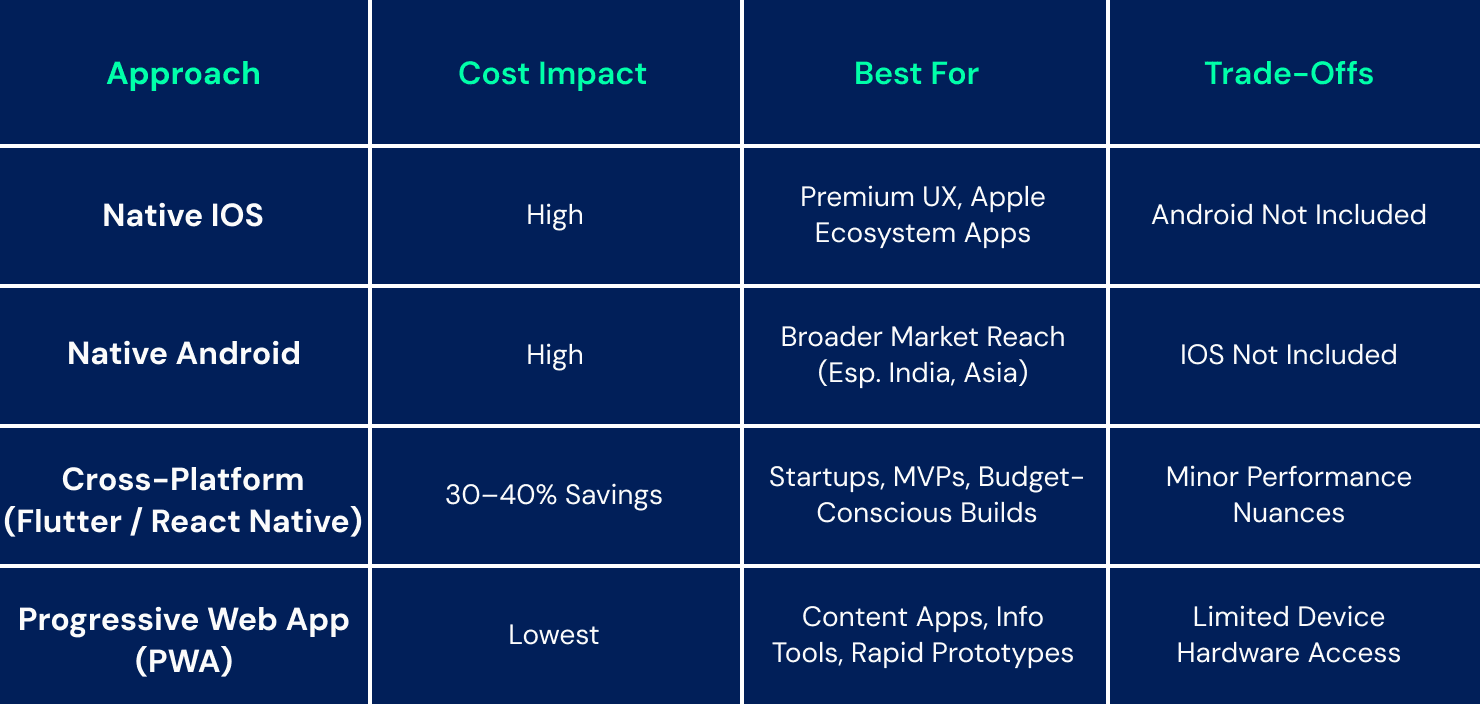
For most early-stage businesses and startups, cross-platform development delivers 80–90% of native performance at a fraction of the price. As your user base grows and revenue confirms demand, you can invest in fully native experiences.
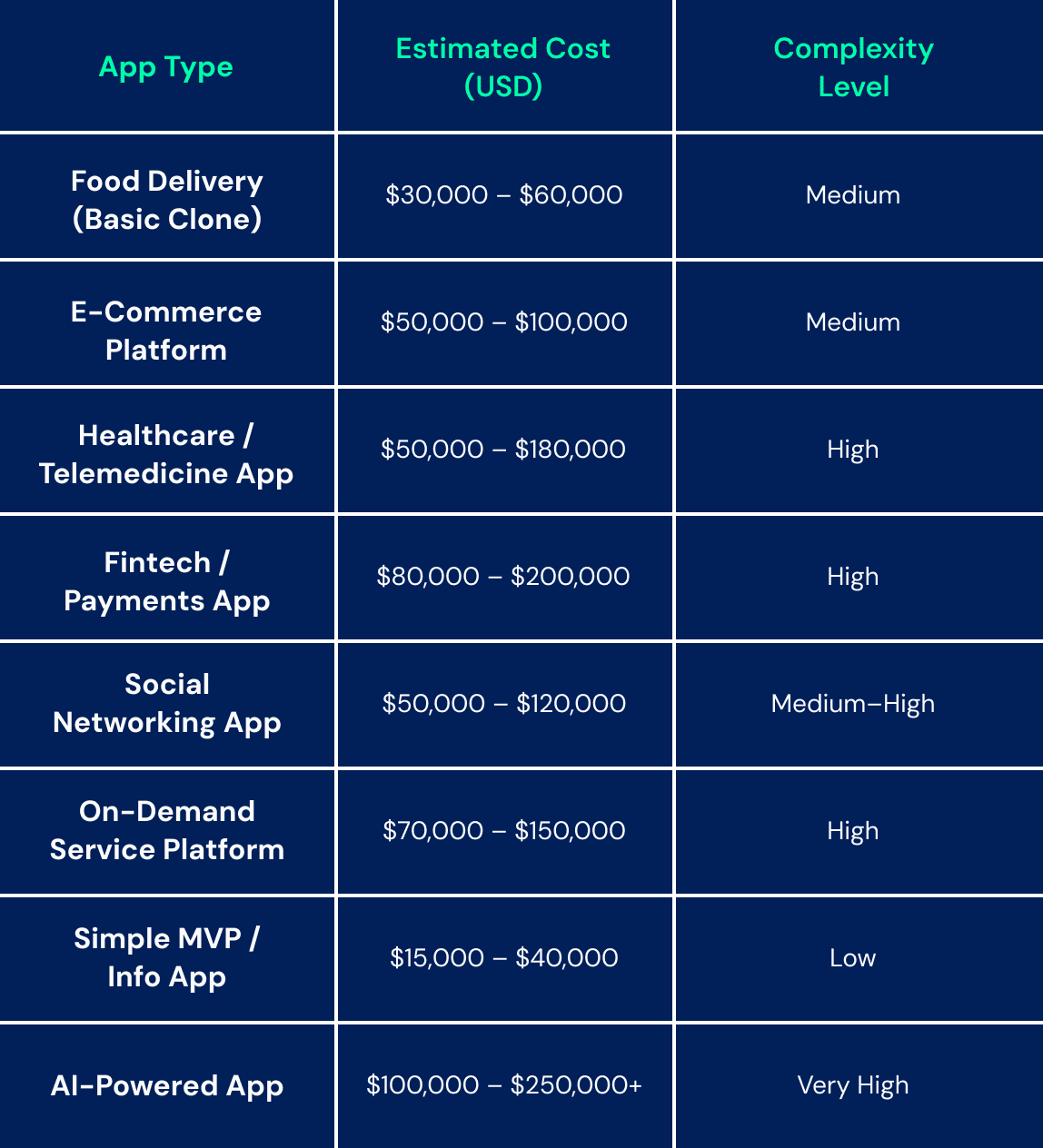
What Popular App Types Actually Cost
Real-world app cost estimates are more useful than abstract formulas. Here’s what different categories typically run in 2026:
5 Hidden Costs Most Budgets Miss
Sticker shock after launch is common — and avoidable. These are the costs that rarely make it into initial proposals but can add up to 25–40% of your core development budget:
1. App Store Fees — Apple charges $99/year; Google Play charges a one-time $25 registration fee. Factor these in from day one.
2. Cloud Hosting & Storage — Ongoing AWS, GCP, or Azure bills for backend infrastructure. Costs scale with your user base.
3. Third-Party API Licensing — Google Maps, Stripe, Twilio, and similar services charge per call or usage, which compounds as your app grows.
4. Security Audits & Compliance — If you’re handling payments, health data, or personal information, compliance certifications (PCI-DSS, HIPAA, GDPR) carry real costs.
5. Marketing & ASO — Building an app nobody downloads is an expensive mistake. Budget for App Store Optimization, performance marketing, and user acquisition from launch day.
How to Reduce App Development Costs Without Cutting Corners
Spending less doesn’t have to mean getting less. Smart founders and product teams use these proven strategies to stay lean while building quality:
- Start with an MVP — Launch only your core feature set. Validate demand with real users before investing in advanced functionality.
- Choose cross-platform development — Flutter or React Native gives you iOS and Android from a single codebase, cutting effort dramatically.
- Leverage open-source and existing APIs — Don’t build what already exists. Use battle-tested third-party services for authentication, payments, maps, and messaging.
- Partner with an offshore agency — India-based development teams offer world-class quality at a fraction of US or UK market rates.
- Define requirements thoroughly upfront — Scope creep is the single biggest cause of budget overruns. Crystal-clear specifications reduce expensive mid-project pivots.
- Prioritize ruthlessly — Every “nice to have” feature has a cost. Delay anything that doesn’t directly serve your core value proposition.
Why Businesses Choose India for App Development
India’s developer ecosystem has matured significantly over the past decade. Today, it’s not just about cost — it’s about access to deep technical talent, a mature project management culture, and experience across 50+ industry verticals.
The numbers speak clearly: what costs $30,000–$150,000 in the US or Europe typically runs $5,000–$30,000 with an Indian development partner of equivalent skill. The cost difference enables businesses to ship faster, iterate more, and invest in growth rather than infrastructure.
At Digital Auxilio Technology, we combine the cost advantage of India-based talent with global delivery standards — transparent communication, agile methodology, and a proven track record across mobile and web product development.
How to Choose the Right App Development Partner
Your development partner is one of the most consequential choices in your product journey. Here’s what to evaluate:
- Portfolio depth — Have they built apps in your industry or with similar feature complexity?
- Technical expertise — Do they have specialized skills in the platforms, frameworks, or integrations your project needs?
- Discovery process — A good partner asks tough questions before writing a single line of code. Beware of anyone who jumps straight to quoting.
- Communication and transparency — Regular updates, clear timelines, and honest escalation when problems arise are non-negotiable.
- Post-launch support — What happens after the app ships? Who maintains it, fixes bugs, and handles App Store updates?
- Pricing model — Fixed-price works for defined scopes. Time-and-material is better for evolving products. Make sure the model aligns with your project’s nature.

Budget for Value, Not Just Cost
Building a mobile app in 2026 is an investment — one with the potential to transform how your customers engage with your business. Whether you’re a first-time founder validating a product idea with a $30,000 MVP or an enterprise rolling out a $200,000 platform, the decisions you make around team, technology, and scope will define your outcome far more than the price tag.
The most important thing isn’t finding the cheapest developer. It’s finding a partner who understands your business goals, communicates openly, and builds for the long term.
Digital Auxilio Technology is here to be that partner. From initial scoping through post-launch growth, we bring the technical expertise, transparent process, and genuine investment in your success that your project deserves. Reach out today and let’s build something worth launching.
Frequently Asked Questions
Q1. How much does it cost to build a mobile app in 2026?
App development costs in 2026 range from $20,000 to $250,000+ depending on complexity. Simple apps and MVPs typically cost $20,000–$50,000, mid-complexity apps like e-commerce or booking platforms run $50,000–$120,000, and enterprise-grade apps with AI, fintech, or healthcare features can exceed $120,000–$250,000.
Q2. What is the biggest factor that affects mobile app development cost?
The biggest cost drivers are feature complexity, platform choice, and team location. Adding real-time GPS, AI recommendations, or payment gateways significantly increases development hours. Choosing cross-platform development (Flutter/React Native) over native can save 30–40% of your total budget.
Q3. How long does it take to build a mobile app?
Timelines vary by complexity:
- Simple apps — 2 to 4 months
- Mid-complexity apps — 4 to 7 months
- Enterprise/complex apps — 7 to 12+ months
Thorough discovery and well-defined requirements upfront can significantly reduce development time and avoid costly delays.
Q4. What are the hidden costs of mobile app development?
Beyond the core build, common hidden costs include:
- App Store fees — $99/year (Apple), $25 one-time (Google)
- Cloud hosting — ongoing AWS, GCP, or Azure bills
- Third-party API licensing — Google Maps, Stripe, Twilio, etc.
- Security & compliance — HIPAA, GDPR, PCI-DSS certifications
- Marketing & ASO — user acquisition and App Store Optimization
Q5. Why do Indian app development companies charge less than US or UK firms?
The cost difference comes down to labor market economics, not quality. India has a large, highly skilled developer talent pool with significantly lower living costs, allowing agencies to offer competitive rates of $20–$50/hour versus $100–$200/hour in the US or UK. Reputable Indian agencies like Digital Auxilio Technology deliver global-standard quality at a fraction of Western market rates.
Search
Recent Post
- How AI in Mobile App Development Is Transforming Apps in Real Use
- Generative AI vs Agentic AI: A Complete Guide to Their Key Differences
- Accelerate UI/UX Prototyping with Design Systems in the USA
- Top 10 Mobile App Development Challenges Faced in the USA Market
- How to Choose the Best Mobile App Development Company in the UK
- Why PHP Web App Development Remains Ideal for Scalable Business Growth
Categories
- Digital marketing (14)
- E-Commerce Development (13)
- Mobile App Development (46)
- software development (4)
- UI/UX Design (6)
- Website Development (21)
You may also like

How AI in Mobile App Development Is Transforming Apps in Real Use Working with the Right Team Introduction Artificial Intelligence...


Generative AI vs Agentic AI: A Complete Guide to Their Key Differences Working with the Right Team Introduction The world...
Accelerate UI/UX Prototyping with Design Systems in the USA Working with the Right Team Introduction In the intensely competitive digital...