
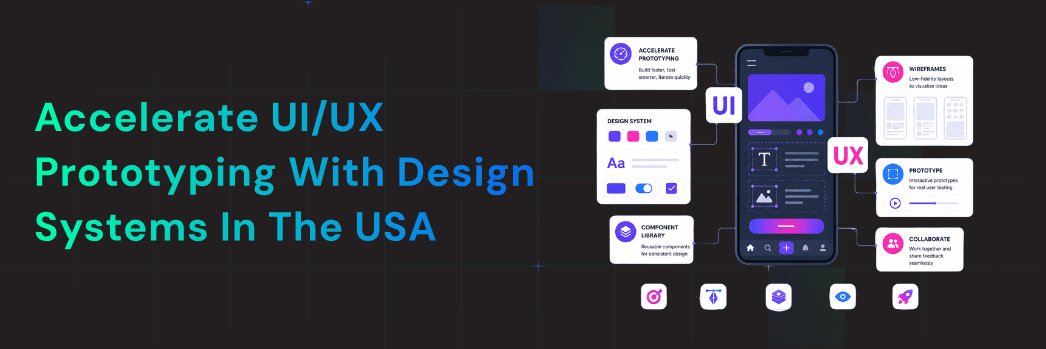
Accelerate UI/UX Prototyping with Design Systems in the USA
- Miss. Lily
- 2 min read
Working with the Right Team
Introduction
In the intensely competitive digital world, organisations all over the USA are becoming more and more determined to launch new and innovative digital products faster, with a focus on delivering an outstanding user experience. From creating a mobile app to a web app to a SaaS app to an enterprise solution, no matter what the scope of the work is, speed and consistency have become major factors in success. That’s where the importance of UI/UX prototyping and design systems comes in.
With the growth of innovation, modern organisations have increasingly adopted prototyping solutions to give their concepts, test their user journeys, and minimise the associated development risks prior to their implementation. However, it can take a long time and is expensive to develop a prototype for each project. Design systems overcome this by offering reusable components, system design patterns, and highly organised workflows that dramatically increase prototyping speeds.
Design systems can also help speed up the development of high-quality digital experiences, minimize inconsistencies, and facilitate collaboration between designers and developers for businesses looking for reliable prototype design and development services. Modern efficient design methods give a critical advantage to those organizations making the transition into the digital world as it increasingly impacts industries across the USA. As the digital transformation moves through an organization and continues to impact industries across the USA, those who utilize efficient design methods get a head start on their competition.
Understanding UI/UX Prototyping in Modern Digital Product Development
The development of user interface and user experience representations directly before development has begun is called a prototype. These prototypes enable stakeholders, designers, developers, and the end-users to test the functionality, navigation, and user experience before a significant amount of resources are invested into producing the product.
Modern prototyping is more than just a static wireframe. The prototypes are today much closer to the actual interactions, allowing businesses to test them, get feedback, and make decisions on them at an early stage of their development. This is because it helps organisations to minimise uncertainty and avoid revising costs later in the development process.
A number of businesses today are collaborating with specialised digital printer prototype design in the USA to guarantee that their digital products align with their customers’ wishes and business objectives. By making use of prototyping, companies can uncover usability issues, tweak customer journeys, and verify product concepts prior to proceeding to full-fledged growth.
Prototyping has become a vital component of successful digital product strategies in business across different industries with the increasing expectations of the customers.
How Design Systems Accelerate UI/UX Prototyping
Design systems are sets of organised design elements, such as components and design principles, patterns, and standards, with the aim of making the process of creating digital products easier. They create consistency and diminish repetitive work, thereby enhancing the proficiency of prototyping UI/UX.
Reusable Components Reduce Design Time
The reusable interface components are one of the key benefits of design systems. You can reuse components like buttons, forms, navigation menus, cards, icons, and typography styles and even customise them.
Teams can easily create prototypes by piecing together pre-designed elements, saving considerable time and effort. This gives a great boost to the design, and organisations are able to speed up project schedules considerably. Using component-based design can enable businesses to achieve faster design cycles and increase productivity when collaborating with a reputable prototype design company.
Consistent User Experiences Across Platforms
It is essential to provide positive user experiences by being consistent. Design systems help ensure consistency of visual elements, interactions, and behaviours across sites, on mobile apps, and digital platforms.
This uniformity brings about user trust, helping the usability and reinforcing the user recalling the brand identity. Consumers have the same user-friendly interfaces, whether they’re on the desktop, tablet, or mobile device, for a more engaged, satisfying experience.
It is crucial for businesses outsourcing prototype designs in the USA to ensure that all their digital assets are aligned when it comes to their brand recall and relationship with their customers.
Faster Collaboration Between Designers and Developers
It is not uncommon for there to be communication issues between design and development teams that result in missed deadlines, misunderstandings, and expensive changes. With design systems, consistency in language creates better collaboration throughout the product development process.
Designed prototypes can be built using standardized parts, while the standardized parts are used by developers when developing prototypes. This alignment helps to minimize confusion, streamline handovers, and optimise workflow.
Design systems are vital for many top prototype development firms to optimise development processes and facilitate better inter-team collaboration among diverse teams.
Minimising Design Errors and Rework
Usability problems and design inconsistencies frequently mean costly redesign work. The use of tested and approved components minimises the possibility of error in the prototyping phase if a design system is used.
Standardised design rules keep the uprightness of teams and make sure prototypes match the established business and user experience rules. This decreases the amount of rework, reduces time, and alleviates the uncertainty of project results.
Key Benefits of Using Design Systems for USA Businesses
Design systems deliver tangible benefits that help to drive growth and innovation as businesses aim to develop faster and more effectively.
Improved Product Development Efficiency
Design systems eliminate repetitive design work and can help teams tackle complex UX challenges. Organisations can use more strategic resources, as they can reduce some of the manual efforts and enhance the workflow efficiency.
Design systems can be used when companies require a full prototype design and development solution to ensure enhanced productivity and code quality across the development lifecycle.
Faster Time-to-Market for Digital Products
Time is crucial for the digital economy these days. Companies that are able to introduce new products into the market efficiently reap significant benefits and are able to adapt to customer requirements much faster.
Design systems can facilitate rapid prototyping, more speedy approvals, and quicker development processes. The streamlined process enables companies to get new and innovative products to market sooner and deliver quality user experiences.
If you want your prototype to come out in time and help your business grow, you don’t need to think of creating a completely new design system, as a reputable prototype design company in the USA can share its expertise to reduce the turnaround.
Enhanced Brand Consistency
A strong brand is based on a consistent brand experience and visual identity. Design systems enable organisations to ensure that their designs remain consistent at each interaction point with the customer, particularly in all of their products or services.
Familiar colours, typography, layouts, and patterns of interactions contribute to the brand’s recognisability and professionalism in the customer’s experience. This is especially advantageous for enterprises with a number of products or an extensive reach that accept various kinds of clients throughout the USA.
Better Scalability for Growing Organisations
It is becoming more and more difficult to be consistent with teams and products as organisations grow. Design systems are scalable and can be used for growth without impacting quality.
New members on the team can easily use proven standards, and existing teams can easily run larger product practices. This scalability is a major asset for businesses looking for long-term digital growth, making design systems a strategic investment.
Design System Trends Shaping the USA Digital Market in 2026
Designed systems are constantly developing, driven by advancements in technology and shifting consumer expectations. There are a few new trends impacting the way companies work with UI/UX prototyping in 2026.
AI-Assisted Design Workflows
The use of AI in the design process is revolutionising the industry by streamlining repetitive tasks, suggesting design ideas, and speeding up the prototyping process. Designers can use AI tools to generate layouts and test layouts more efficiently for usability and optimise user flow.
Prototype development efforts that we are investing in are increasingly using AI-powered workflows to boost productivity and shorten project timelines.
Component-Driven Development
CWD programs are gaining prominence throughout the USA technology industry. This is a similar concept to design systems and provides teams a way to create digital products with reusable modular components.
This leads to quicker development time, greater consistency, and streamlined maintenance in large digital ecosystems.
Accessibility-First Design Approaches
The requirement of accessibility has become a big priority among modern organisations. Accessibility is a core component in design systems, as it is taken into account in the initial design stages to make digital products accessible for everyone.
Although accessibility work is often overlooked by many businesses, by making it embedded in reusable components, businesses can make difficult but necessary experiences inclusive and fulfil accessibility rules, as well as reach a wider audience of potential customers.
Cross-Platform Design Standardisation
Users want to have smooth processes, irrespective of gadget or system. Cross-platform design standardisation helps companies to provide uniform interactions in both web and mobile apps and new digital channels.
This pattern creates a growing need for branded experience prototypes designed and developed by a professional prototype design and development firm that can be implemented on multiple platforms while being both efficient and scalable.

Conclusion
US design systems are now ubiquitous for boosting UI/UX prototyping and enhancing digital product development procedures. They save organisations the time they would take to develop their products as well as mistakes and enhance collaboration; they also provide reusable elements and ensure consistency.
Companies that are able to afford professional prototype design services, work with a highly trained prototype development company, and use a strong design system will be at a huge advantage in today’s fast-changing digital marketplace. But as trends like AI-driven design, designing for access and accessibility, and component-first design and development practices persist, design systems will continue to be integral to effective digital innovation.
Organizations that want to streamline the prototype design and development process can gain a competitive edge by implementing a strategic design system approach that will enhance productivity, reduce time to market, deliver greater consistency of brands, and enable sustainable long-term growth.
Frequently Asked Questions
Q1. What is UI/UX prototyping?
UI/UX prototyping is the process of creating interactive design models that simulate a product’s functionality, helping teams test, validate, and improve user experiences.
Q2. What are the 4 types of prototypes?
The four common prototype types are paper prototypes, low-fidelity prototypes, high-fidelity prototypes, and interactive prototypes used for design testing and validation.
Q3. Is UI/UX in demand in the USA?
Yes, UI/UX design remains highly demanded in the USA as businesses prioritise user-friendly digital products, customer satisfaction, and competitive online experiences.
Q4. Which tool is commonly used for UI/UX prototyping?
Figma is the most commonly used UI/UX prototyping tool, offering collaborative design, interactive prototyping, and efficient workflow management for teams.
Q5. What are the different types of prototypes in UI UX?
UI/UX prototypes include paper, low-fidelity, high-fidelity, clickable, interactive, and functional prototypes, each serving different stages of design and testing.
Search
Recent Post
- How AI in Mobile App Development Is Transforming Apps in Real Use
- Generative AI vs Agentic AI: A Complete Guide to Their Key Differences
- Accelerate UI/UX Prototyping with Design Systems in the USA
- Top 10 Mobile App Development Challenges Faced in the USA Market
- How to Choose the Best Mobile App Development Company in the UK
- Why PHP Web App Development Remains Ideal for Scalable Business Growth
Categories
- Digital marketing (14)
- E-Commerce Development (13)
- Mobile App Development (46)
- software development (4)
- UI/UX Design (6)
- Website Development (21)
You may also like

How AI in Mobile App Development Is Transforming Apps in Real Use Working with the Right Team Introduction Artificial Intelligence...

Generative AI vs Agentic AI: A Complete Guide to Their Key Differences Working with the Right Team Introduction The world...
Accelerate UI/UX Prototyping with Design Systems in the USA Working with the Right Team Introduction In the intensely competitive digital...