Imagine a busy clinic struggling to keep up with patient follow-ups, missing critical reminders, and facing growing concerns about data security. At the same time, patients feel frustrated by long wait times, lack of communication, and limited access to their own health data. In today’s digital-first world, these gaps can quickly erode trust and impact care quality.
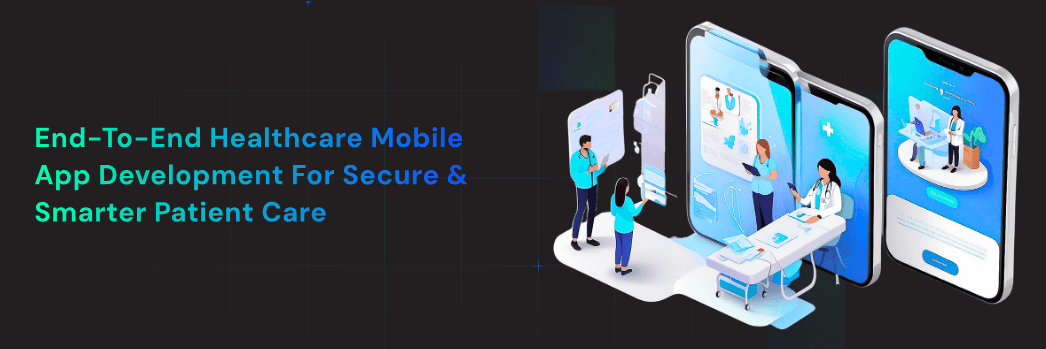
This is whereend-to-end healthcare mobile app development becomes a game-changer. By creating seamless, secure, and fully integrated mobile solutions, healthcare providers can manage the entire patient journey from appointment booking to post-treatment monitoring—in one unified platform.
Modern healthcare apps offer HIPAA/GDPR compliance, real-time access to patient data, and integrated telemedicine features, ensuring both convenience and security. Companies like Digiauxilio specialize in building such robust solutions across platforms, including Android App Development, iOS App Development, React Native App Development, and Flutter App Development.
With the right development partner, healthcare organizations can deliver smarter, safer, and more connected patient care experiences.
Why End-to-End Healthcare Apps Essential?
End-to-end healthcare mobile app development refers to the complete lifecycle of building an application from initial discovery and design to deployment and ongoing maintenance. Unlike fragmented systems that rely on multiple disconnected tools, end-to-end solutions offer a unified platform that enhances efficiency and patient satisfaction.
Fragmented healthcare apps often lead to missed appointments, inconsistent data, and poor user experience. In contrast, integrated apps can reduce patient no-shows by up to 30 percent, streamline workflows, and improve communication between patients and providers.
Key Drivers Behind Adoption
Rising demand for telehealth and remote consultations
Need for better patient engagement and retention
Increasing regulatory pressures (HIPAA, GDPR)
Shift toward value-based and data-driven care
Healthcare providers are increasingly turning to Digiauxilio healthcare app development experts to build scalable, cost-effective solutions using cross-platform frameworks like React Native and Flutter. These technologies reduce development time while maintaining high performance across devices.
Example
A multi-location clinic replaces its outdated scheduling and record systems with a unified mobile app. As a result, appointment attendance improves, patient satisfaction increases, and administrative workload drops significantly.
Core Features for Secure & Smarter Patient Care
A well-designed healthcare app acts like a digital nervous system connecting patients and providers instantly. It ensures real-time communication, accurate data sharing, and proactive care.
Must-Have Features
Secure EHR/EMR integration for centralized patient records
Biometric authentication such as fingerprint or facial recognition
Appointment scheduling and automated reminders
Telemedicine and video consultation capabilities
AI-powered symptom checkers
Wearable device integration for real-time health monitoring
Security Pillars
End-to-end encryption to protect sensitive data
Role-based access control to restrict data visibility
Audit logs and monitoring for compliance and transparency
Healthcare providers can leverage solutions from Digiauxilio through their Android, iOS, React Native, and Flutter development services to implement these features efficiently.
Example
A patient uses a healthcare app to book an appointment, consult a doctor via video, and receive prescriptions within one secure platform. Meanwhile, the doctor accesses the patient’s medical history instantly, enabling faster and more accurate diagnosis.
Development Process
Building a healthcare app requires a structured, compliance-focused approach. Here is how end-to-end healthcare mobile app development ensures success:
1. Discovery & Compliance
This phase involves understanding user needs and ensuring regulatory compliance.
Identify target audience and define core features
Conduct HIPAA and FDA compliance assessments
Example: A hospital ensures all patient data workflows meet compliance standards before development begins.
Design plays a crucial role in adoption, especially for diverse user groups.
Create intuitive interfaces for all age groups
Focus on accessibility and ease of navigation
Example: Elderly users can easily book appointments through a simplified dashboard.
Development
Choosing the right technology stack is critical.
Native development using Android and iOS for high performance
Cross-platform development using React Native and Flutter for cost efficiency
Digiauxilio provides expertise in both approaches, ensuring flexibility and scalability.
Testing & Security
Healthcare apps must undergo rigorous testing.
Perform penetration testing to identify vulnerabilities
Ensure scalability under high user loads
Example: Stress testing ensures the app performs smoothly during peak usage without downtime.
Deployment & Maintenance
Launching the app is only the beginning.
Optimize the app for store visibility
Provide regular updates and feature enhancements
Overcoming Challenges in Healthcare App Development
Healthcare app development comes with unique challenges that require strategic solutions.
Common Challenges
Data privacy and security risks
Interoperability with legacy systems
High development and maintenance costs
Effective Solutions
Implement FHIR and HL7 standards for seamless integration
Use secure cloud infrastructure for data storage
Adopt hybrid or cross-platform architectures
Partner with experienced teams like Digiauxilio for compliant development
Example
A clinic struggling with outdated systems adopts FHIR-based integration, enabling smooth data exchange between old and new platforms without disrupting daily operations.
Future Trends in Healthcare Mobile Apps
The future of healthcare mobile apps is driven by innovation and advanced technologies.
Emerging Trends
AI-powered diagnostics and predictive analytics
5G-enabled remote monitoring
Blockchain for secure medical records
Virtual reality-based therapy and rehabilitation
These advancements will enable more proactive, personalized, and efficient patient care.
Healthcare providers looking to stay ahead can partner with Digiauxilio to build future-ready applications using modern technologies and frameworks.
Start building next-generation healthcare apps today.
Conclusion
End-to-end healthcare mobile app development is transforming patient care by combining security, efficiency, and innovation. From seamless appointment scheduling to real-time monitoring and AI-driven insights, these apps empower both providers and patients.
By focusing on compliance, user experience, and advanced technology, healthcare organizations can deliver smarter and more connected care.
Transform patient care with Digiauxilio’s end-to-end solutionsstart today.
Frequently Asked Questions
Q1. What is healthcare mobile app development?
Healthcare mobile app development covers the entire process of building a healthcare app, including planning, design, development, testing, deployment, and ongoing maintenance. It ensures a seamless and secure solution for both patients and providers.
Q2. Why are healthcare mobile apps important for patient care?
Healthcare apps improve accessibility, enable remote consultations, streamline appointment scheduling, and provide real-time access to medical records, leading to better patient outcomes and engagement.
Q3. How do healthcare apps ensure data security and compliance?
Healthcare apps follow strict regulations like HIPAA and GDPR. They use encryption, secure APIs, role-based access control, and regular security audits to protect sensitive patient data.
Q4. What features should a healthcare mobile app include?
Key features include appointment scheduling, telemedicine, EHR/EMR integration, secure login, AI-based symptom checking, and wearable device integration for real-time monitoring.
Q5. Which technologies are best for healthcare app development?
Popular technologies include native development (Android and iOS) for performance and cross-platform frameworks like React Native and Flutter for cost-effective and scalable solutions.