
Learn to Build Eco-Friendly Websites with Sustainable Web Design
- Miss. Lily
- 2 min read
Working with the Right Team
Introduction
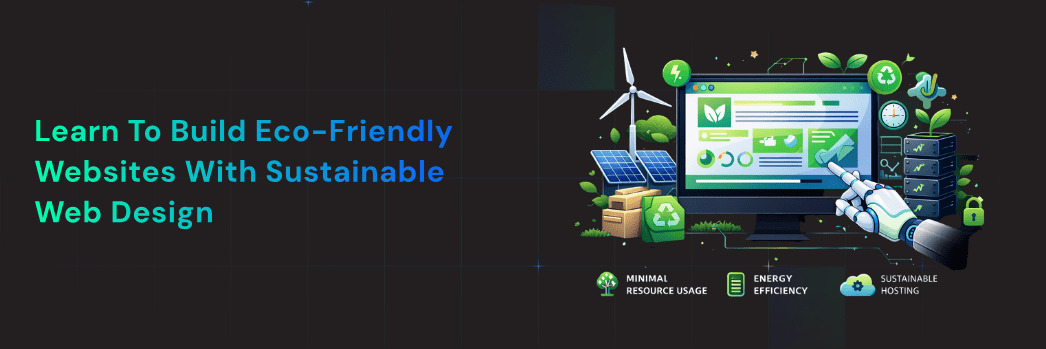
The digital world grows further with each day, and it grows with the unexpected impact it exerts on the environment. And it was time people woke up to realise that every website being opened, every image uploaded, and every animation consumed energy. Individually, it may seem less in its effect, but when it is multiplied by billions of users daily, then the carbon footprint becomes huge. It is in this tide of responsibility, preparing for a future in digital ecosystems, that the need for eco-friendly website design began surfacing as highly relevant. Sustainable web design stopped being a flash in the pan and finally became a strategic lever for progressive brands wanting to reduce their footprint on the environment. That means optimisation for performance, first of all, by reducing superfluous data transfer thanks to efficient hosting solutions. Companies will then provide high-performing and responsible digital platforms from an environmental standpoint. The results will come in the form of even better user experience and speed, lower bounce rates, and better brand reputation. That’s why companies chasing their benefit now unite with a sustainable web design agency or at least take into consideration those website design firms that understand the need for carbon-efficient digital solutions. Be it creating a new platform or refining one, sustainable web design comes with better performance and lower operational costs while sustaining an excellent brand image. Later in this document, we’ll be learning in detail how eco-friendly web design works, why it matters, and what steps are necessary toward building a greener digital future by leveraging intelligent website design services backed by custom web development.
What is sustainable web design?
That means a website using fewer resources, loading in minimum time, with less energy consumption throughout its lifetime. Efficient coding while designing the website to be sustainable shall focus on shrinking the load on servers, optimising the visual content, and making sure the platform performs on all devices with ease.
Quite simply, the lighter and leaner the site is, the less it consumes in energy. Each saved kilobyte means less emitted CO₂ and space left for an improved Internet in which responsible behaviour will come to light. Attention will be drawn to responsible choices without aesthetic or functional compromises; actually, the double goal of best performance and environmental sustainability will come true. With sustainable web design, companies enjoy faster loading and increased satisfaction on the part of users, at the same time ensuring even better visibility within search engines. The search engines give priority to those websites that offer optimised performance; for this reason, sustainability in design is no longer solely an ethical choice but intrinsic for a digital strategy. This goes hand in glove with strengthening audience trust: the more eco-conscious brands demanded by consumers, the stronger the audience trust is in implementing eco-friendly website design that actually demonstrates environmental responsibility.
Key principles of sustainable web design
The guiding principle set would be the backbone of a strong and green site, promising better performance with aims to reduce environmental impacts while increasing user satisfaction. It will guide designers, developers, and businesses to move towards their go-green and responsible digital presence.
Lightweight and Efficient Code
Actually, code is the heart of any website. Lousy coding with useless libraries and inflated scripts raises data transfer and reduces performance. Lean and efficient code refuses waste, making sure the site is functionally smooth without consuming too much energy. This means that businesses also reduce server response times, creating better user experiences by keeping code clean and not loading it up with plugins, going custom where necessary.
Strong coding practices also include security, a lower maintenance cost, and better scalability. A website design company using sustainable methods will make sure each line of code has a purpose for serving and keeping the site faster and consuming fewer resources.
Energy-Efficient Visual Design
While these elements add to a generally appealing look, images, videos, and animations are among the most power-consuming elements on a website. This also is one of those places where sustainable web design is looking for optimisation through the reduction of file sizes, increasing loading speed with the help of modern image formats like WebP, compression of media files without interference with their quality, and avoidance of visual clutter.
Energy efficiency in visual design furthers performance, enabling a website to load in a fraction of the time, even on slower networks. This again will help users who stay in remote or bandwidth-restricted regions access the platform; therefore, more users can be reached. It is, therefore, a design that will balance aesthetics with efficiency to provide for eco-friendly web design that is pragmatic, elegant, and sensitive to environmental concerns.
Sustainable Hosting Providers
Hosting can be considered a major ecological footprint determinant of a website. Traditional data centers rely on huge quantities of energy, most of which could come from nonrenewable sources. Also, hosting companies, in turn, power servers with renewable resources such as solar or wind, which greatly reduces carbon emissions.
It is with green energy-powered hosting companies that businesses can directly ensure sustainability. Often, these providers guarantee better performance and uptimes, and above all, the best security. Among the best ways for brands wanting to make long-term moves, this shift into eco-friendly hosting shows that the web design is truly sustainable.
Adopting Minimalist and User-Friendly Design
Minimalism is not a visual trend but an intentional and strategic process wherein one cleans up the noise to put clarity, access, and meaningful interaction at its heart. In its basic function, minimalist design serves both the causes of sustainability and conversion in such a way that it is going to make sure that visitors can find what they need fast without loading unnecessary data.
Prioritizing Essential Content
Too much content on the website makes it sluggish in performance. Emphasising main content will make sure that only the information truly needed by the user is delivered, get rid of redundancies, and let the visitors find clear goals.
It will also be easier to use since the energy consumption will be reduced by saving unnecessary downloads and data transfer. This, in turn, would mean businesses could benefit from better engagement, lower bounce rates, and improved conversions. This, too, makes up the content that is SEO-friendly, as it will make all the information needed crawlable and indexable by search engines. Lean content is integral to sustainable website design and furthers twin causes: user experience and environmental concerns.
Simplifying Navigation
Overly complicated navigation structures puzzle users and result in additional demands on a server that uses more energy. Simplification in navigation would mean being able to let visitors find just what they are looking for with just a minimum number of clicks or page loads. In this respect, efficiency would greatly be improved, while user satisfaction can be achieved. Indeed, good user experience equated to intuitive navigation through such a simple menu, clear categorization, and strategic internal linking.
Using Lightweight Visual Elements
Lightweight visuals are in the starring role in sustainable web design: big images and uncompressed video make up the lion’s share of the energy consumption of a website. The lightweight visuals reduce load times and optimize bandwidth usage to offer faster browsing on all devices. Websites made by companies these days avoid the inclusion of heavy media files but include only responsive images, SVG graphics, and even CSS-based animations. That keeps aesthetic appeal without overloading resources.
Improved Overall User Experience
User experience and sustainability tie in. If a website is structured, loads fast, and is intuitive, then it will keep encouraging people to stay longer on the website and, therefore, engage them for more time.
Sustainable design is about enhancing usability regarding speed, clarity, and accessibility. Logically, improved user experiences guarantee better conversion rates, higher search engine rankings, and stronger brand authority.
Practical Steps to Make Your Website Eco-Friendly
An outrageous, brand-new website design is not a requirement for a company to have an eco-friendly website. Small, consistent changes can significantly reduce the energy required. The changes that help the company to be more eco-responsible also give them the possibility to improve their digital efficiency at the same time.
Reducing Excessive HTTP Requests
The number of elements on the web page contributes to how many HTTP requests are sent out. Excessive requests slow down the loading speed and increase the carbon footprint. Some of the ways to reduce excessive HTTP requests include combining files, minifying scripts, optimising images, and reducing plugins that one does not need. With this, a well-optimised website would, in such a case, load faster, use fewer resources, and lead to a much slicker experience.
Implementing Effective Browser Caching
Browser caching ensures that a website remembers previously loaded resources on the user’s device. When returning visitors come to your site, this will load much faster because the browser will not need to download all of the resources anymore. In this regard, performance is improved in various types of devices because less energy is being consumed. For businesses in particular, effective caching means server load is reduced, bandwidth usage can be lowered, and browsing becomes so much better.
For every web development service with the application of the principles of sustainability, the caching strategy is always part of and favors long-term optimization for the satisfaction of users.
Future of Sustainable Web Design
Innovation, responsibility, and technology represent the drivers of the future in sustainable web design. With more and more firms starting to realise the ecological cost of their digital footprint, the demand for green web design has continuously been on the rise. The fight for sustainability has become a global priority through government, organization, and global community encouragement towards greener digital practices. New generations of web design are driven by AI-driven optimisation, renewable-powered servers, lighter frameworks, and carbon-monitoring tools. Website design agencies specialised in sustainability will be among the leading agents who will support this growing global movement for clean digital ecosystems.
Early adoption of strategies leading to sustainable methods means an improvement in brand trust, a decrease in costs, and an advantage that enhances competitive edge for businesses. The major vectors of future sites will be efficiency, accessibility, speed, and ethical responsibility. It is much more than a design trend; it actually constitutes a foundation for responsible digital growth.

Conclusion
Sustainable web design gives real meaning to creating a more responsible digital world. Embracing efficient code, optimized visuals, renewable hosting, and minimalist layouts makes for significant changes in reducing carbon footprint while improving website performance at the same time. Sustainable website design for quicker loading times opens new ways toward better user experiences, such as strengthening of brand credibility, for all those qualities add up to long-term value. Be it new development or upgrading the current one, finding a sustainable web design agency or collaborating with website design companies that know eco-friendly principles inside out is going to be a strong investment. By leveraging appropriate website design services, a business gets to create high-impact platforms that resonate with the objectives of the environment and elicit great experiences among end-users, along with bespoke custom web development solutions.
The shift to sustainable web design allows for an opportunity to innovate, reduce the impact on the environment, and hence contribute towards greener digital times ahead. In that vein, embracing the philosophy of eco-friendly website design today really enables an organization to make responsible, efficient, and future-ready digital platforms that will be good both for the users and for the planet.
Frequently Asked Questions
Q1. What is eco-friendly or sustainable web design?
Eco-friendly web design focuses on creating energy-efficient, fast, and lightweight websites that reduce environmental impact while delivering excellent user experience.
Q2. Why is sustainable web design important today?
Sustainable web design is important because it lowers carbon emissions, saves energy, improves performance, and supports environmentally responsible digital growth.
Q3. How can a website reduce carbon emissions?
A website can reduce carbon emissions by optimising images, using clean code, using faster hosting, using caching, and choosing green web hosting providers.
Q4. Is sustainable web design more expensive?
Sustainable web design is not expensive; it often reduces long-term costs through better performance, lower bandwidth usage, and efficient maintenance.
Q5. Does improving website speed make it more eco-friendly?
Yes, faster websites consume less server energy, reduce data transfer, and improve user experience, making them more eco-friendly and sustainable.
Search
Recent Post
- Learn to Build Eco-Friendly Websites with Sustainable Web Design
- The Impact of AI in Mobile App Development on Modern Apps
- How Digital Marketing Helps Businesses Grow in Today’s Competitive Market
- End-to-End Healthcare Mobile App Development for Secure & Smarter Patient Care
- Why Laravel Is the Best PHP Framework for Enterprise Web Apps?
- Testing Strategies for Bug-Free Mobile App Launches
Categories
- Blog (57)
- Cybersecurity (1)
- It Solution (2)
- Mobile App (20)
- option1 (1)
- option2 (1)
- QA Testing (4)
- UX Design (2)
- Website Development (7)
- WordPress (3)
Tags
Android App Development
Android App Development Services
Angular vs React
app development
AppDevelopment
app development company in India
App Store Optimization
best app development companies
Custom App Development
Custom App Development Company
Custom mobile app development
Custom web applications
digiauxilio
Digital Auxilio
Digital Marketing Company
Digital marketing services
Ecommerce Development
ECommerce website development
flutter app development
Hire Android App Developers
ios app development
iOS app development company
iOS app development services
mobile app
Mobile App Development
MobileAppDevelopment
mobile app development company
mobile app development company in India
mobile app development services
Mobile Applications
seo
seo company
SEO executives
SEO experts
seo services
Shopify Development
Social Media Marketing
UI/UX Design
UI/UX Designing Services
web apps designed
Web Designing Services
Web development
Website Designs
Website Development
WordPress eCommerce Development
You may also like
Learn to Build Eco-Friendly Websites with Sustainable Web Design Working with the Right Team Introduction The digital world grows further...


The Impact of AI in Mobile App Development on Modern Apps Working with the Right Team Introduction Artificial Intelligence (AI)...

How Digital Marketing Helps Businesses Grow in Today’s Competitive Market Working with the Right Team Introduction Business today is more...