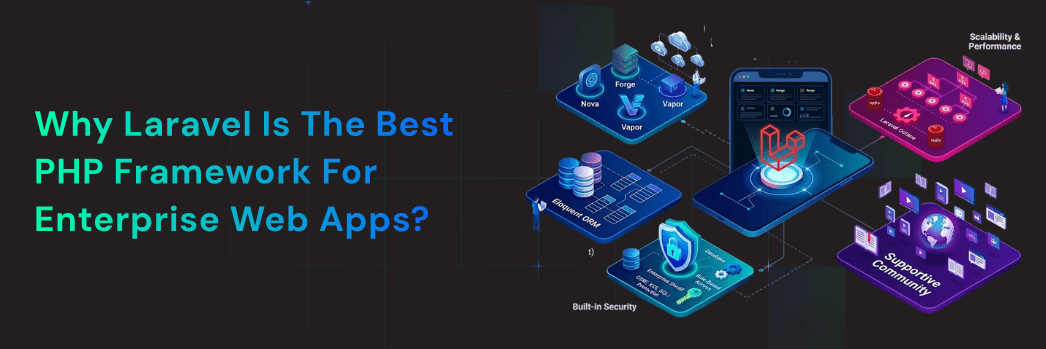
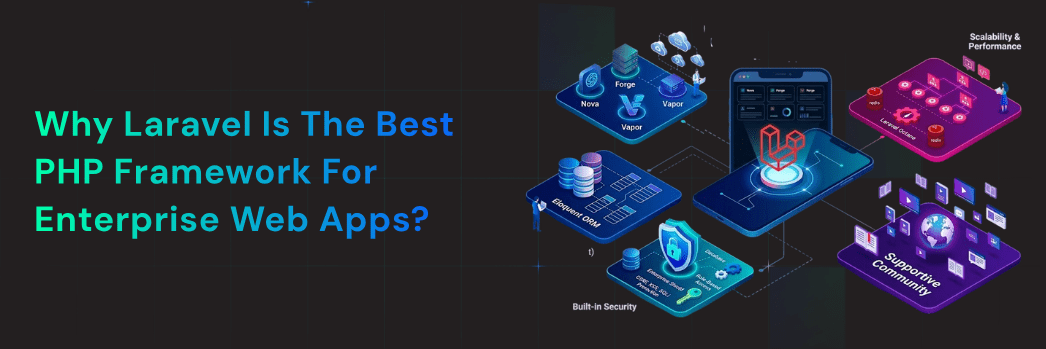
Building enterprise-level web applications is no small task. Businesses today demand platforms that are scalable, secure, high-performing, and future-ready. Whether it’s handling thousands of users, integrating with multiple systems, or ensuring airtight security, the foundation of your application plays a critical role.
This is where Laravel stands out. Over the years, Laravel has evolved into one of the most reliable and developer-friendly PHP frameworks, trusted by startups and large enterprises alike.
Choosing the right framework is not just a technical decision—it directly impacts your product’s performance, time-to-market, and long-term success. In this blog, we’ll explore why Laravel is considered the best choice for enterprise web applications.
What is Laravel?
Laravel is an open-source PHP framework designed to make web development faster, easier, and more efficient. It follows the MVC (Model-View-Controller) architecture, which separates business logic from presentation, resulting in cleaner and more maintainable code.
What sets Laravel apart is its rich ecosystem, built-in tools, and elegant syntax. It simplifies complex tasks like routing, authentication, caching, and database management, allowing developers to focus on building robust applications instead of reinventing the wheel.
Why Enterprises Need a Strong Framework?
Enterprise applications are fundamentally different from small-scale websites. They require:
High scalability to handle growing user bases
Strong security to protect sensitive business data
Seamless integrations with CRMs, APIs, and third-party tools
Long-term maintainability for continuous updates and improvements
A weak or outdated framework can lead to performance bottlenecks, security risks, and high maintenance costs. That’s why enterprises need a framework like Laravel that is built with modern development needs in mind.
Top Reasons Laravel is Best for Enterprise Apps
1. Scalability & High Performance
Laravel is designed to scale with your business. Whether you’re launching a new SaaS product or managing a large enterprise platform, Laravel can handle increasing workloads efficiently.
With support for caching systems like Redis and Memcached, Laravel ensures fast response times even under heavy traffic. It also integrates well with cloud platforms, making horizontal scaling seamless.
2. Built-in Security Features
Security is a top priority for enterprise applications, and Laravel takes it seriously. It offers built-in protection against common threats such as:
Cross-Site Request Forgery (CSRF)
Cross-Site Scripting (XSS)
SQL Injection
Laravel also provides secure authentication systems and password hashing, ensuring that sensitive data remains protected at all times.
3. Clean Code with MVC Architecture
Laravel follows the MVC architecture, which helps developers organize code efficiently. This results in:
Better code readability
Easier debugging
Faster development cycles
Simplified collaboration among teams
For enterprises managing large codebases, this structure is crucial for long-term sustainability.
4. Faster Development & Time-to-Market
Time is money in the business world. Laravel speeds up development with features like:
Pre-built modules
Blade templating engine
Artisan command-line tool
Built-in authentication and routing systems
These tools reduce development time significantly, allowing businesses to launch products faster and stay ahead of competitors.
Powerful Database Management (Eloquent ORM)
Laravel’s Eloquent ORM simplifies database interactions by allowing developers to work with databases using intuitive syntax instead of complex SQL queries.
Benefits include:
Faster development
Cleaner database operations
Easy relationships between data models
This is especially useful for enterprise apps dealing with large and complex datasets.
6. Built-in Testing & Reliability
Laravel comes with built-in testing support, enabling developers to write unit and feature tests easily. This ensures:
Bug-free deployments
Stable performance
Better user experience
For enterprises, reliability is non-negotiable—and Laravel delivers on that front.
7. Cloud & Microservices Ready
Modern enterprise applications often rely on cloud infrastructure and microservices architecture. Laravel integrates seamlessly with cloud platforms like AWS and supports API development for microservices.
This makes it a future-proof choice for businesses planning to scale and evolve their applications over time.
Real Use Cases of Laravel in Enterprise
Laravel is widely used across industries for building:
eCommerce Applications – Secure and high-performance online stores
Enterprise Dashboards – Real-time analytics and reporting tools
Its flexibility allows businesses to tailor solutions according to their specific needs.
Laravel vs Other PHP Frameworks
Laravel vs CodeIgniter
Laravel offers better scalability and modern features
CodeIgniter is lightweight but lacks advanced tools
Laravel vs Symfony
Symfony is powerful but more complex
Laravel provides a simpler and faster development experience
Overall, Laravel strikes the perfect balance between power, flexibility, and ease of use, making it ideal for enterprise applications.
Why Choose Digiauxilio for Laravel Development?
If you’re planning to build a robust enterprise web application, working with the right development partner is just as important as choosing the right framework.
At Digiauxilio, we specialize in delivering custom Laravel development solutions tailored to your business goals. Our services include:
From faster development cycles to robust security features and cloud readiness, Laravel offers everything modern enterprises need to build powerful digital solutions.
If you’re planning your next enterprise application, Laravel is not just a good choice—it’s the smartest one.
Frequently Asked Questions
Q1. Why is Laravel considered the best PHP framework for enterprise applications?
Laravel offers scalability, strong security, clean MVC architecture, and built-in tools that make it ideal for handling complex enterprise-level web applications efficiently.
Q2. Is Laravel suitable for large-scale enterprise projects?
Yes, Laravel is highly scalable and supports high-traffic applications, making it perfect for large-scale enterprise solutions like SaaS platforms and CRMs.
Q3. How secure is Laravel for enterprise web development?
Laravel provides built-in security features such as protection against CSRF, XSS, and SQL injection, along with secure authentication and data encryption mechanisms.
Q4. Can Laravel handle high traffic and performance demands?
Absolutely. Laravel supports caching tools like Redis and Memcached, queue management, and cloud integration, ensuring high performance even under heavy traffic.
Q5. How does Laravel compare to other PHP frameworks?
Compared to frameworks like CodeIgniter and Symfony, Laravel offers a better balance of ease of use, advanced features, scalability, and faster development, making it a preferred choice for enterprises.